Storms and strong winds: how to protect your home, car and garden
⏱ 3 min read
Roof, garden, car, warnings. A guide based on official advice. The same text is in the free SurvivalZone.app and works without internet.
Severe storms with strong winds and hail are becoming more frequent, and not only in summer. Much of the damage is caused by things that could have been secured earlier: loose roof parts, garden furniture, diseased trees.
This article is about preparing. What to do during a storm is in the step-by-step scenario.
A check before the season
- Check the roof, gutters and flashing. A loose sheet or tile is a common cause of damage.
- Cut back dead branches and report dangerous roadside trees to the council.
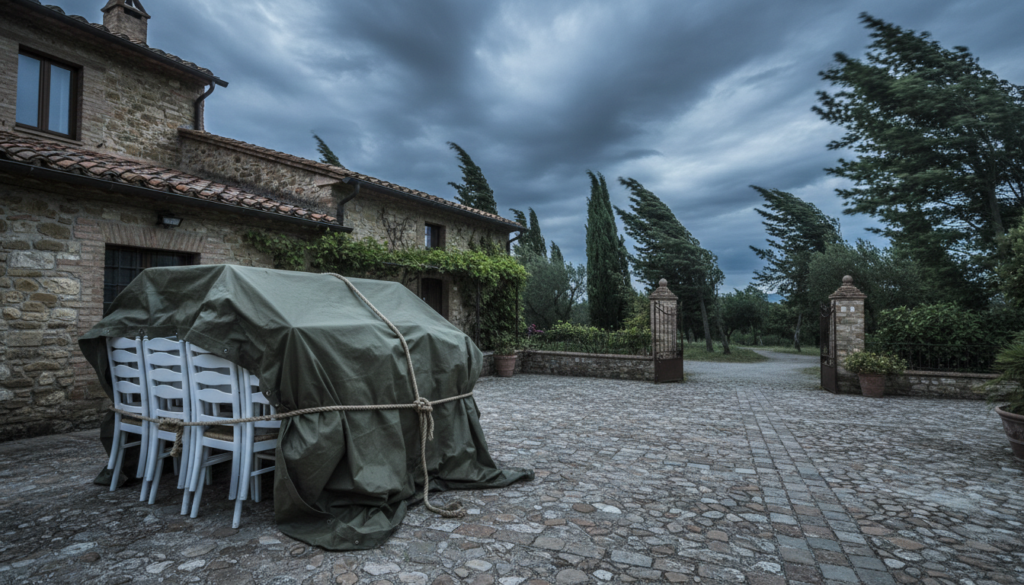
- Plan where you will put garden furniture, a trampoline and the parasol.
- Check that your insurance covers storm and hail damage.
Electronics and power
- A lightning strike can damage equipment even far from where it hits. Surge-protected extension leads help, but the safest option is to unplug the TV, computer and router when a storm approaches. Storms often end in a power cut, so keep a charged power bank and a torch.
Your car
- If you have no garage, choose a covered place in advance, such as a multi-storey car park. A blanket or a special cover protects against hail. Do not park under trees or next to scaffolding.
How to read warnings
- Most European weather services use the same colours: yellow means be aware, orange means be prepared, red means take action. You can see warnings for every country at meteoalarm.org. The most serious ones also come as emergency alerts on your phone.
Checklist
- Roof and gutters checked
- Trees near the house cut back
- A place for garden furniture
- Surge protection or the habit of unplugging
- A place to shelter the car
- Torch and power bank
- Weather warnings and emergency alerts on your phone
- Insurance checked
See also
- ⛈️ Storm, strong wind
- 🔦 Prepare your home for a blackout
- 🧰 Tools and equipment for a crisis
- ⛺ Shelter at home and outdoors
Frequently asked questions
How do I protect my home from a storm?
Check the roof and gutters, cut back dead branches, put away or tie down garden furniture, and close windows and shutters before the storm.
Should I unplug electronics during a thunderstorm?
Yes. Unplug the TV, computer and router. A surge from lightning can damage them.
What does a red weather warning mean?
Very dangerous weather that may threaten life. Stay indoors and follow official advice.
📩 Free 72-hour plan by email
A 72-hour shopping and go-bag list, plus a short monthly checklist. Free, no spam.
Keep it on your phone
SurvivalZone.app is a free app for every emergency, with no account and no app store. It works without internet and shows the nearest shelters and help points, local radio, a 72-hour plan and a mountain trip planner.
Thank you for reading. If this could help someone, send it to the people you care about. Getting ready takes a moment, and in a crisis every minute counts.
Coming soon: the app’s permanent address will be survivalzone.app.
Other guides
- 💧 How to make water safe
- 🍲 Food without power
- ⛺ Shelter at home and outdoors
- 👨👩👧 Protecting your family and yourself
- 💊 Run out of medicine
- 🎒 Go bag checklist
- 🩹 Home first aid kit
- 🔦 Prepare your home for a blackout
- ✈️ Air travel: a safe trip
- 🏜️ Desert trip
- 🪢 Knots worth knowing
- 🔥 Campfire and outdoor cooking
- 🧭 Survival kit for your backpack
- 📞 Family communication plan
- 🥫 Emergency food and medicine supplies
- 🧼 Hygiene in a crisis
- 📁 Documents and money in a crisis
- 🧰 Tools and equipment for a crisis
- 🧥 Clothing and warmth in a crisis
- 📻 Communication and navigation in a crisis
- 🥶 Home ready for frost
- 🌊 Prepare your home for floods
- 🔥 Fire safety at home
- 🌡️ Get ready for a heatwave
- 🚀 Shelter for an air raid
- 📢 Sirens and alerts
- ❤️ Learn CPR and find an AED
- 🌍 Prepare for earthquakes
- ⛵ Safe sailing at sea
- 🚗 Car ready for an accident
- ☠️ Carbon monoxide and gas alarms
- ❄️ Winter car kit
- 🌩️ Mountain storms: plan your hike
- 🫀 Heart attack and stroke signs
- 🏊 Water safety
- 🌲 Prevent wildfires
- 🦠 Prepare for an epidemic or pandemic
- 🧒 If your child gets lost
- 🫁 Prevent choking
- 🩸 Kit for severe bleeding
- 🔥 Prevent burns
- 😷 Smog: protect your health
- 🐻 Bears: avoid encounters
- 🐗 Wild boar: avoid encounters
- 🏢 Evacuation at work
- 🌪️ Shelter from a tornado
- 🌧️ Protect your basement from flash floods
- ☣️ Chemical incident: prepare your home
- 🏠 Quarantine at home
- 🛡️ Secure your phone and accounts
- 🔌 Your fuse box: get ready in advance
- 💨 Gas at home: a safe installation
- 😵💫 Fainting: how to prevent it
- 🏫 School and emergencies: prepare your child and family
- 🏜️ Drought: how to prepare your home and garden
- 🌋 Travelling near volcanoes: how to prepare
- 🛴 Riding an e-scooter safely
- 🛑 Attacker at school: how to prepare your child
- 🔔 Smoke and CO alarms: a home ready for the alarm
- 🔥 Campfire: types and ways to light one
Sources
- Polish government safety guide (MON, MSWiA, RCB, 2025)
- BBK guide "Vorsorgen für Krisen und Katastrophen" (Germany)
Official sources are checked automatically every day. Last check: 2026-11-04.
General guidance only; it does not replace the emergency services. If a life is in danger, call 112.