Heatwaves: how to prepare your home and family for hot days
⏱ 3 min read
Cool home, water, checking on older people. A guide based on official advice. The same text is in the free SurvivalZone.app and works without internet.
Heatwaves are now one of the most common weather hazards in Europe. Older people, young children, people with long-term illnesses and outdoor workers are most at risk.
Heat rarely arrives without warning. Forecasts show it days ahead, so there is time to prepare.
Cool your home before it gets hot
- Shade the sunny windows from the morning. Outside blinds and awnings work better than curtains inside.
- Air the house at night and early in the morning, when it is cooler outside, and keep windows closed during the day.
- Switch off things that give off heat: the oven, computer, chargers.
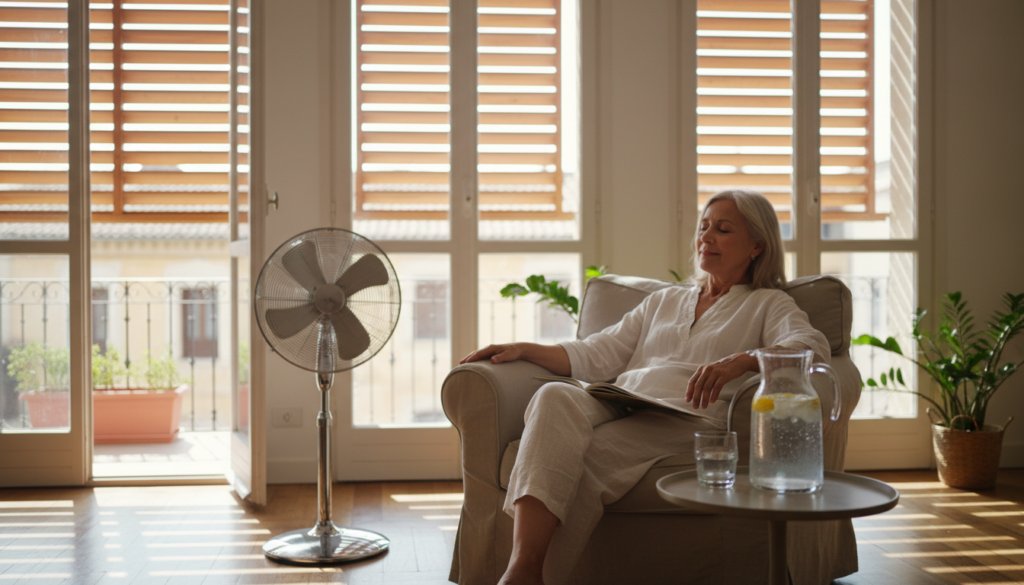
- A fan does not lower the temperature but helps when the room is not too hot. A bowl of ice in front of it gives short relief.
Who needs extra attention
- Older people often do not feel thirsty and do not notice they are overheating. Call older parents or neighbours every day during a heatwave. Some medicines change how the body copes with heat, so it is worth asking a doctor or pharmacist whether anything needs to change.
- Never leave children or animals in a car, not even for a moment. The temperature inside rises very fast.
Water and food
- Drink regularly, before you feel thirsty. Choose water and avoid alcohol. Light meals are easier on the body than heavy ones. Store medicines and food as the packaging says, because heat can spoil them.
Recognise heatstroke
- Headache, dizziness, nausea, weakness and heavy sweating mean: move somewhere cool, drink and rest. Hot, dry skin, confusion and loss of consciousness mean heatstroke. Then call 112 and cool the person down.
A plan for hot days
- Plan effort and shopping for the morning or evening. Find out where there is a cool place nearby: a library, a shopping centre, a church. Heat warnings are issued by your national weather service.
Checklist
- Blinds or curtains on the sunny side
- A plan for airing at night
- Water in the fridge
- A daily call to older relatives
- Medicines checked for heat
- A cool place nearby
- Weather warnings on your phone
See also
- 🌡️ Heatwave
- 💧 How to make water safe
- 👨👩👧 Protecting your family and yourself
- 💊 Run out of medicine
Frequently asked questions
How can I cool my home without air conditioning?
Shade windows from the sun during the day, air the house at night and early morning, and switch off devices that give off heat. Outside blinds work best.
What are the signs of heatstroke?
Hot, often dry skin, confusion, vomiting, loss of consciousness. It is life-threatening: call 112 and cool the person.
Who is most at risk in a heatwave?
Older people, young children, pregnant women, people with long-term illnesses and people doing physical work outdoors.
📩 Free 72-hour plan by email
A 72-hour shopping and go-bag list, plus a short monthly checklist. Free, no spam.
Keep it on your phone
SurvivalZone.app is a free app for every emergency, with no account and no app store. It works without internet and shows the nearest shelters and help points, local radio, a 72-hour plan and a mountain trip planner.
Thank you for reading. If this could help someone, send it to the people you care about. Getting ready takes a moment, and in a crisis every minute counts.
Coming soon: the app’s permanent address will be survivalzone.app.
Other guides
- 💧 How to make water safe
- 🍲 Food without power
- ⛺ Shelter at home and outdoors
- 👨👩👧 Protecting your family and yourself
- 💊 Run out of medicine
- 🎒 Go bag checklist
- 🩹 Home first aid kit
- 🔦 Prepare your home for a blackout
- ✈️ Air travel: a safe trip
- 🏜️ Desert trip
- 🪢 Knots worth knowing
- 🔥 Campfire and outdoor cooking
- 🧭 Survival kit for your backpack
- 📞 Family communication plan
- 🥫 Emergency food and medicine supplies
- 🧼 Hygiene in a crisis
- 📁 Documents and money in a crisis
- 🧰 Tools and equipment for a crisis
- 🧥 Clothing and warmth in a crisis
- 📻 Communication and navigation in a crisis
- 🥶 Home ready for frost
- 🌊 Prepare your home for floods
- 🔥 Fire safety at home
- ⛈️ Storm-proof your home
- 🚀 Shelter for an air raid
- 📢 Sirens and alerts
- ❤️ Learn CPR and find an AED
- 🌍 Prepare for earthquakes
- ⛵ Safe sailing at sea
- 🚗 Car ready for an accident
- ☠️ Carbon monoxide and gas alarms
- ❄️ Winter car kit
- 🌩️ Mountain storms: plan your hike
- 🫀 Heart attack and stroke signs
- 🏊 Water safety
- 🌲 Prevent wildfires
- 🦠 Prepare for an epidemic or pandemic
- 🧒 If your child gets lost
- 🫁 Prevent choking
- 🩸 Kit for severe bleeding
- 🔥 Prevent burns
- 😷 Smog: protect your health
- 🐻 Bears: avoid encounters
- 🐗 Wild boar: avoid encounters
- 🏢 Evacuation at work
- 🌪️ Shelter from a tornado
- 🌧️ Protect your basement from flash floods
- ☣️ Chemical incident: prepare your home
- 🏠 Quarantine at home
- 🛡️ Secure your phone and accounts
- 🔌 Your fuse box: get ready in advance
- 💨 Gas at home: a safe installation
- 😵💫 Fainting: how to prevent it
- 🏫 School and emergencies: prepare your child and family
- 🏜️ Drought: how to prepare your home and garden
- 🌋 Travelling near volcanoes: how to prepare
- 🛴 Riding an e-scooter safely
- 🛑 Attacker at school: how to prepare your child
- 🔔 Smoke and CO alarms: a home ready for the alarm
- 🔥 Campfire: types and ways to light one
Sources
- Polish government safety guide (MON, MSWiA, RCB, 2025)
- BBK guide "Vorsorgen für Krisen und Katastrophen" (Germany)
Official sources are checked automatically every day. Last check: 2026-11-04.
General guidance only; it does not replace the emergency services. If a life is in danger, call 112.