How to light a campfire: fire lays and methods
⏱ 5 min read
Site, tinder, fire lays, safety. A guide based on official advice. The same text is in the free SurvivalZone.app and works without internet.
A fire gives warmth, boils water and lifts morale. Before you light one, check that it is allowed: rules differ by country and area, and in many places fires are banned in forests and during drought or high fire risk.
Site and safety
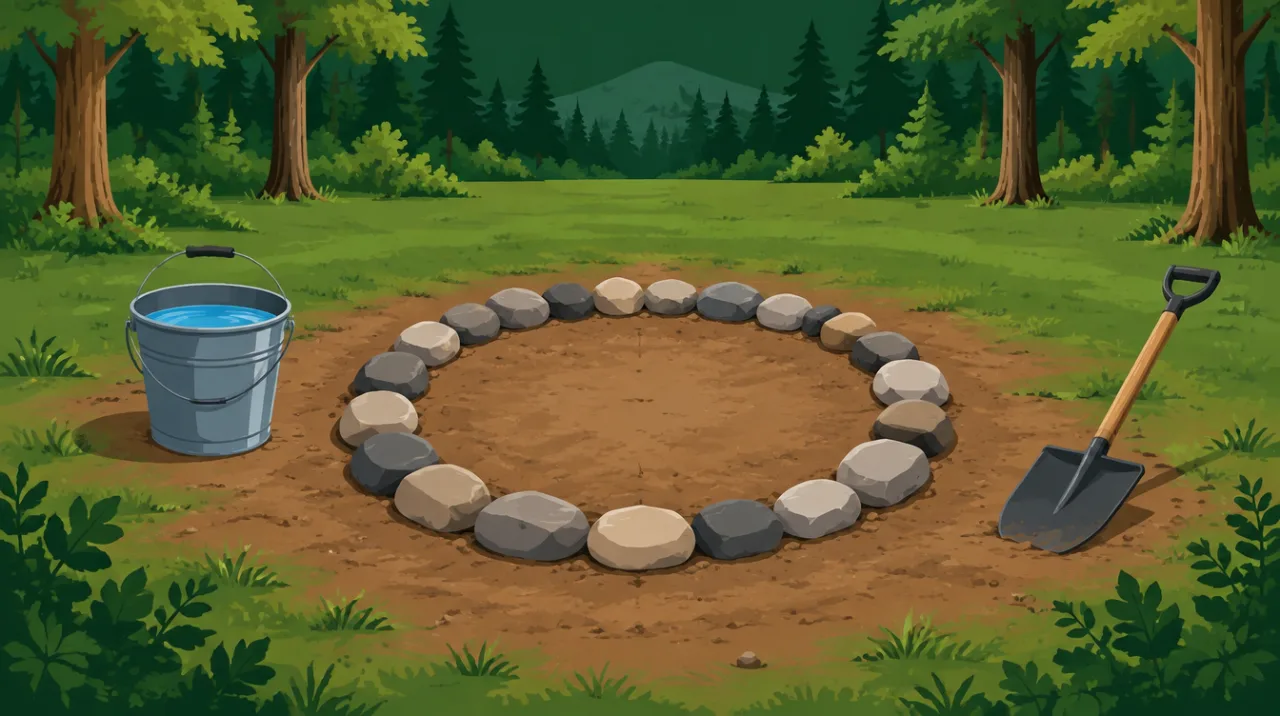
- Pick a spot sheltered from the wind, away from trees, bushes, dry grass, your tent and low branches.
- Clear a circle about 2 m wide of leaves, needles and turf. Do not build a fire on moss or peat: it can smoulder underground.
- Ring the fire with stones or dig a shallow pit. Avoid wet stones from a river: they can crack.
- Keep water or sand close. Never leave a fire unattended.
- Keep children at least 2 m from the fire.
Gather three things first
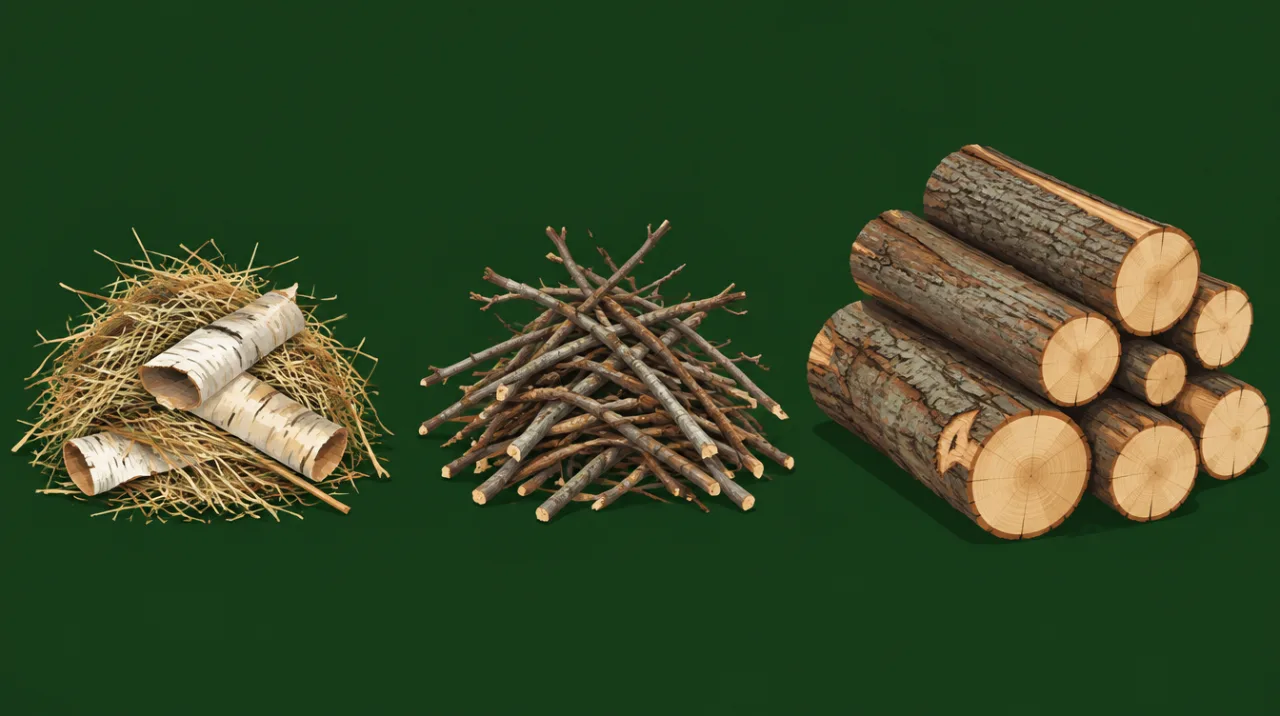
- Tinder: dry grass, birch bark, wax-soaked cotton, paper, shavings from dry wood, pine cones, resin. It should catch from a spark or a match flame.
- Kindling (match to pencil thickness): dry twigs that snap with a crack. Gather more than you think you need.
- Fuel: wood that gets thicker step by step, from wrist to forearm thickness. Pick dry, standing or raised-off-the-ground wood, not wood from wet ground.
Fire lays
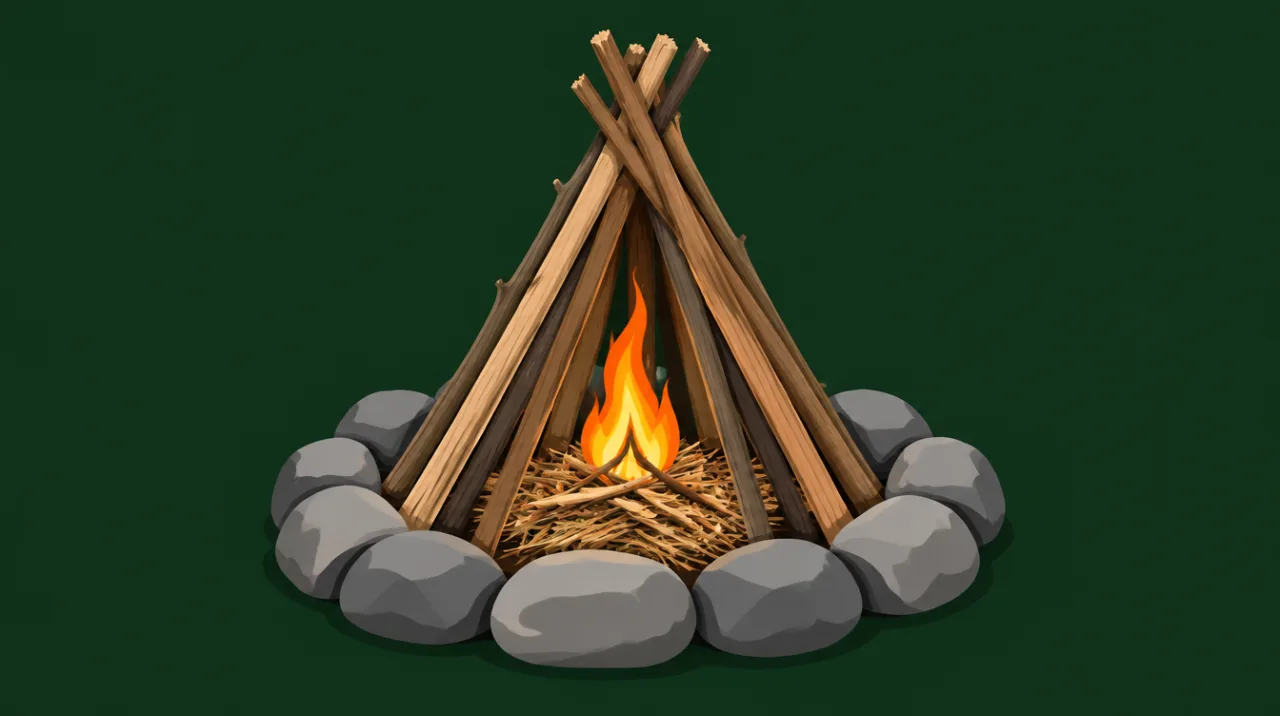
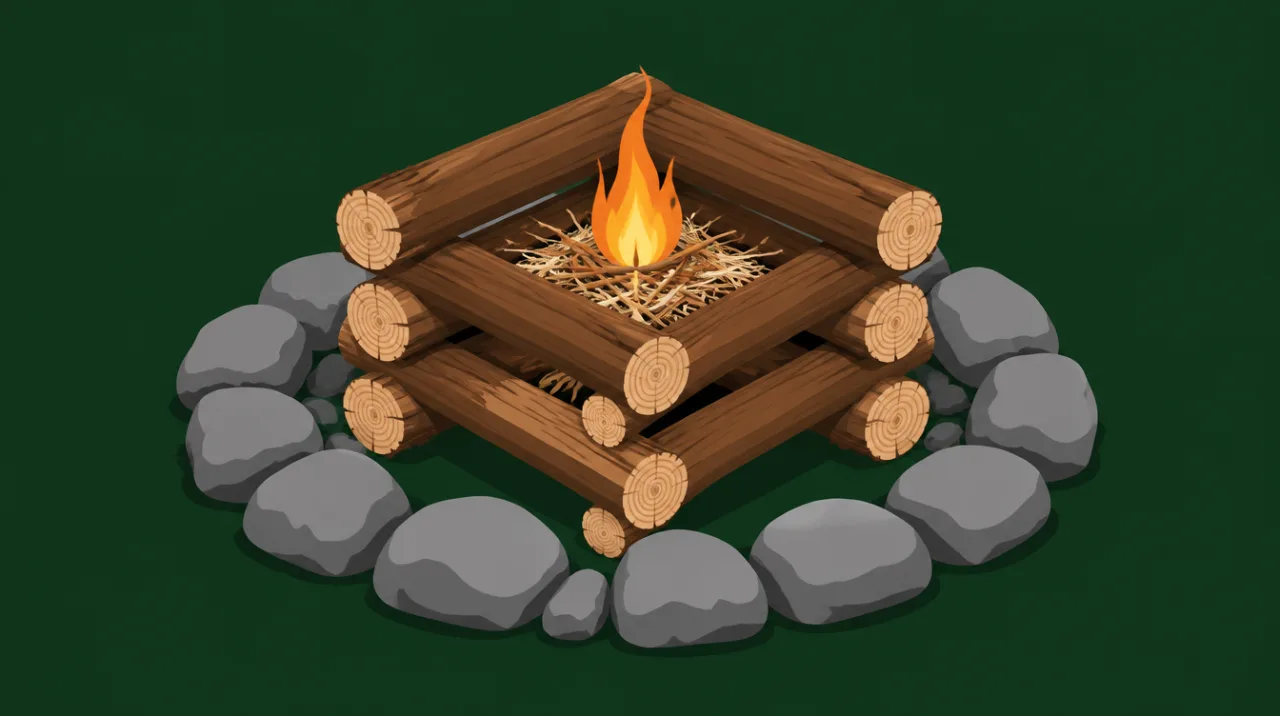
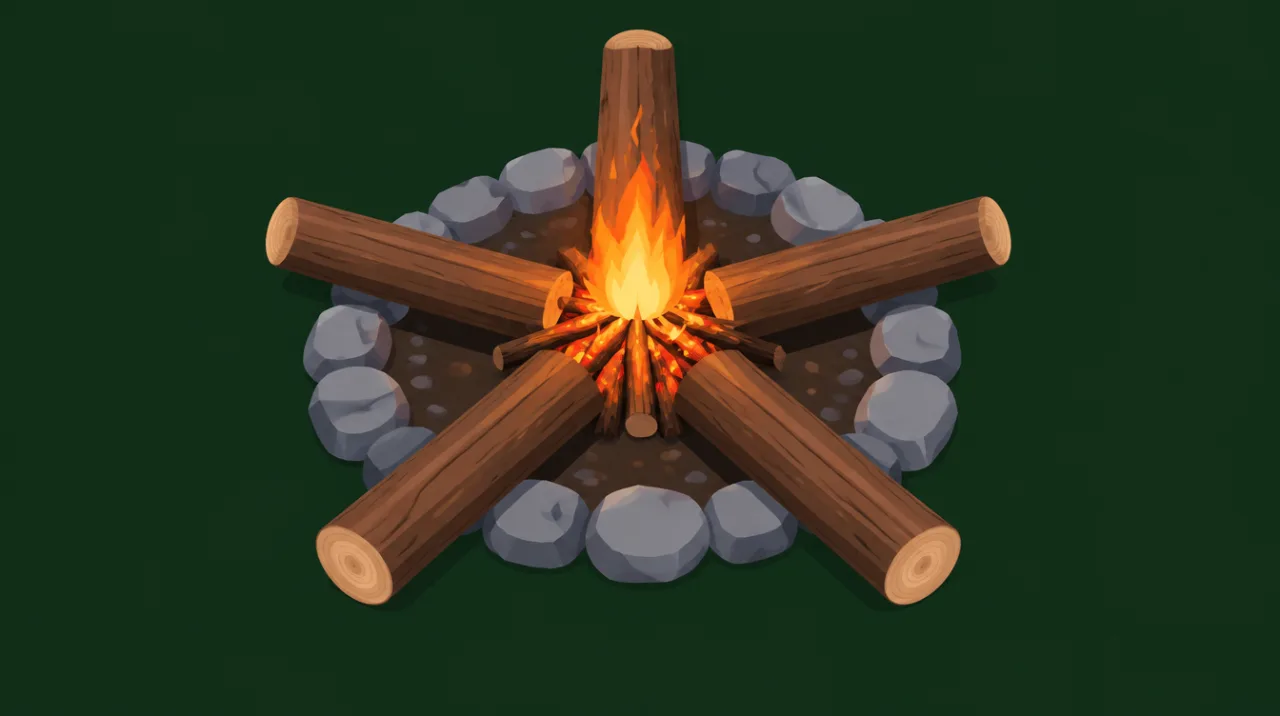
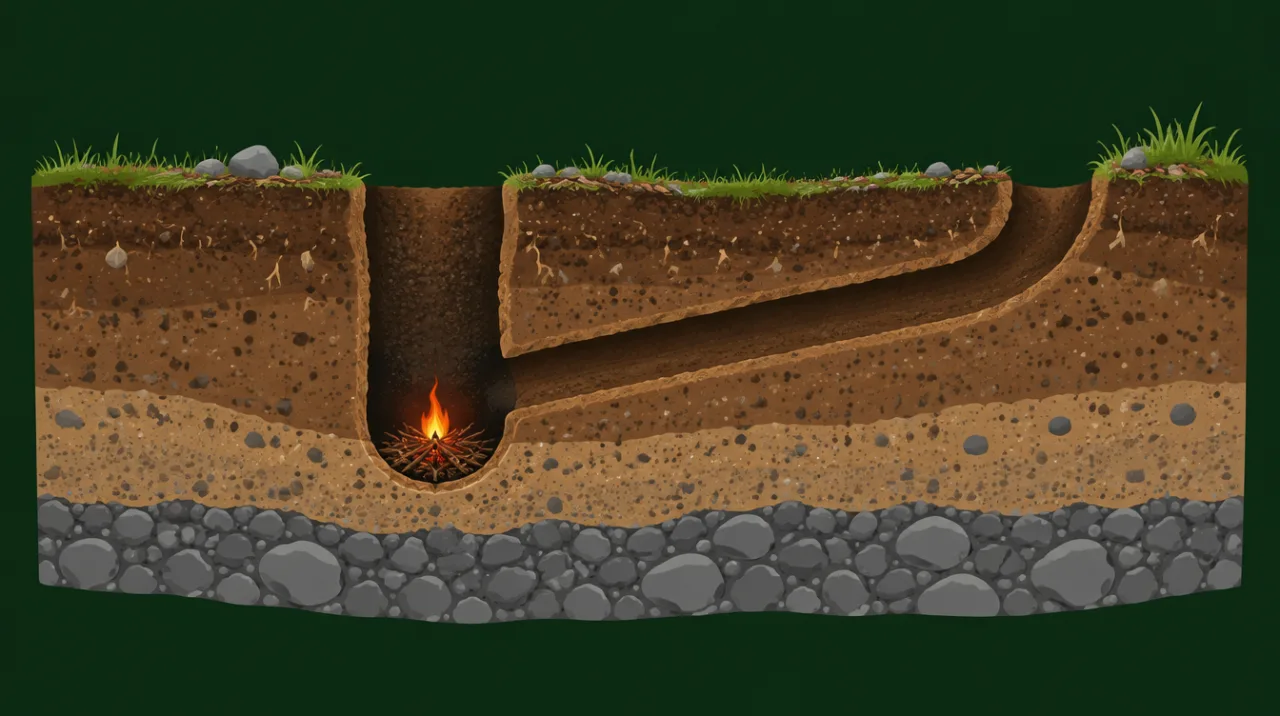
- Tepee: kindling leaned into a cone around the tinder. Catches fast and gives a strong flame, good for boiling water.
- Log cabin: a square of logs with layers of ever finer wood on top. Burns evenly and long, good for heat and coals.
- Lean-to: a long stick propped on a rock with kindling underneath. Good in wind because it shields the flame.
- Star: thick logs laid like spokes with the ends touching. Burns slowly and saves wood: you push the logs in as they burn.
- Dakota hole: two connected holes, one for the fire and one to feed air. Little smoke and few sparks, sheltered from wind.
- Platform: on wet or snowy ground, lay a base of thick sticks or bark first.
Ways to light it
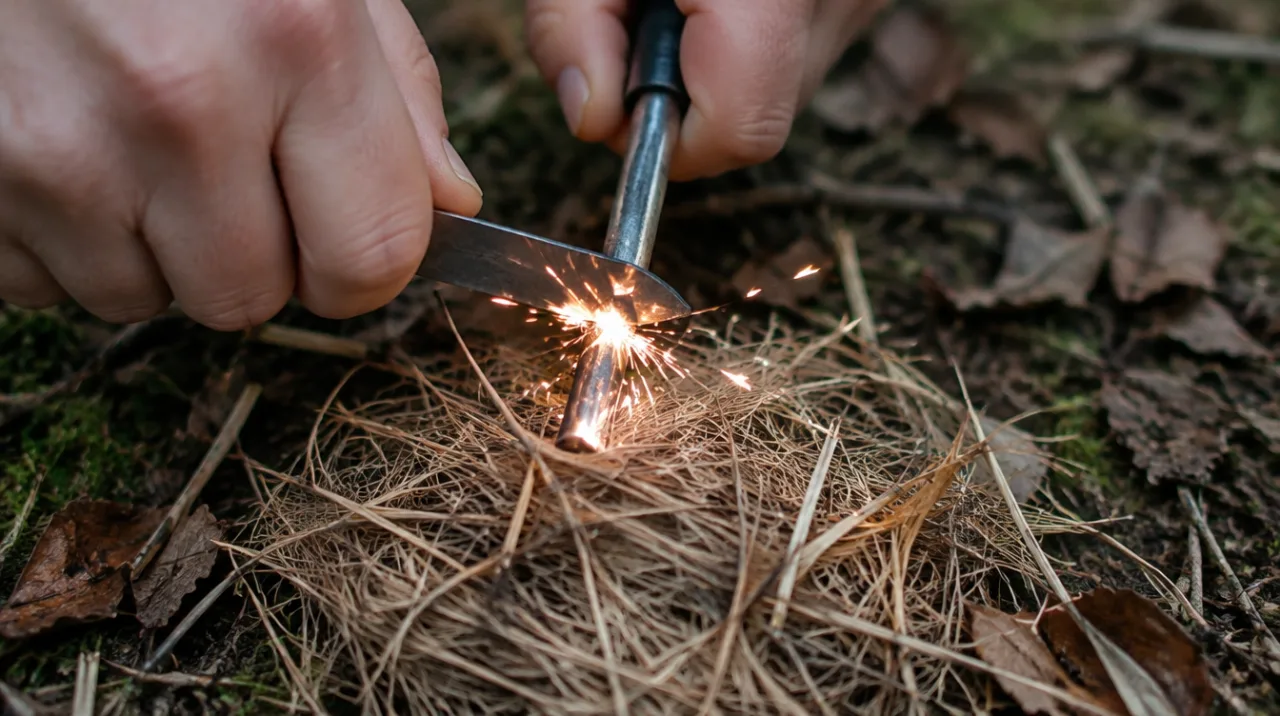
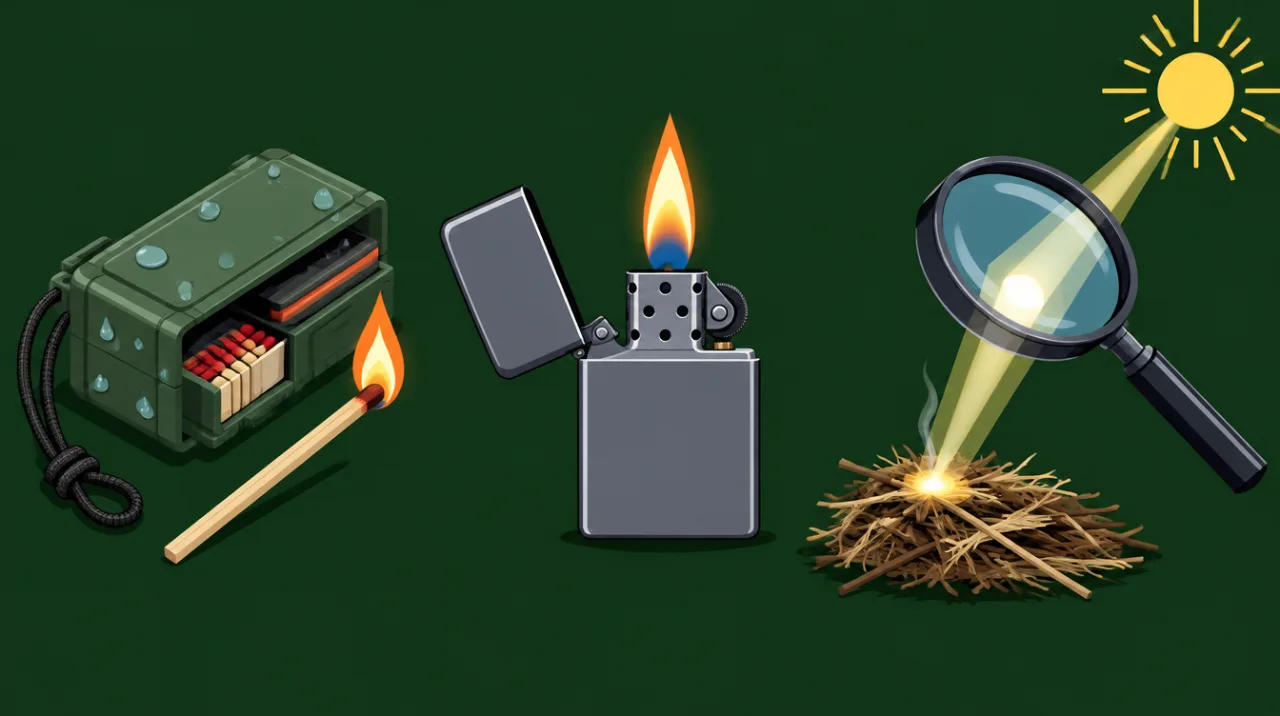
- Matches and lighter: the simplest. Storm matches or matches in a waterproof case belong in every pack. A lighter hates the cold: keep it in a pocket close to your body.
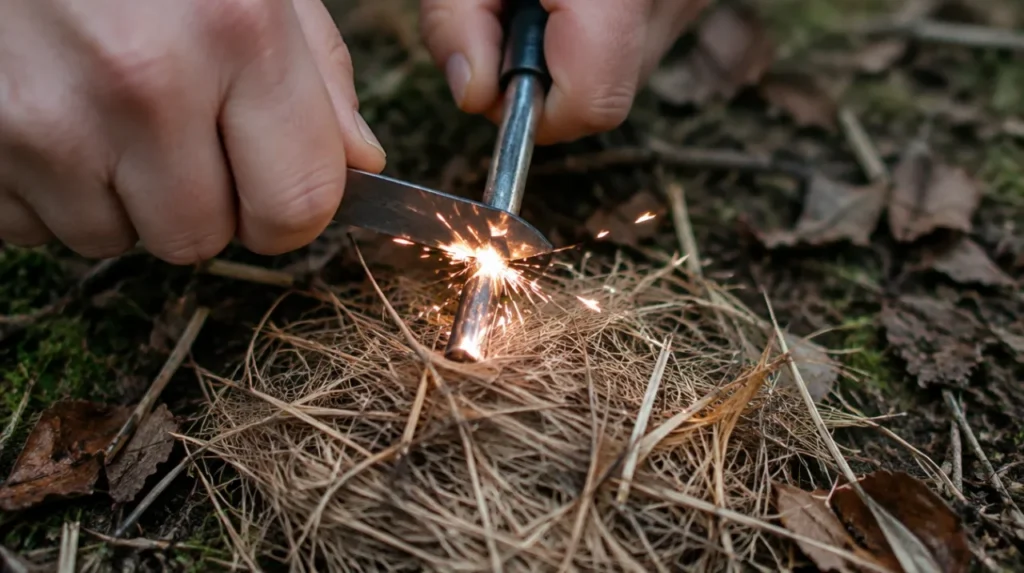
- Ferro rod (ferrocerium): scrape the rod with a knife spine so sparks land on the tinder. Works wet and in the cold. Hold the rod low, right at the tinder, and pull the knife back.
- Magnifying glass or lens: only in strong sun. Focus the dot on dark, dry tinder.
- 9 V battery and fine steel wool: touched to the terminals, the wool glows and ignites. Keep it away from your face.
- Bow drill: a last resort that takes strength, practice and dry wood. Practise in advance, there will be no time in a crisis.
Step by step
- Prepare everything before the first spark: tinder, kindling in three thicknesses and fuel.
- Put the tinder on a dry base (bark, a piece of wood) and build your lay around it.
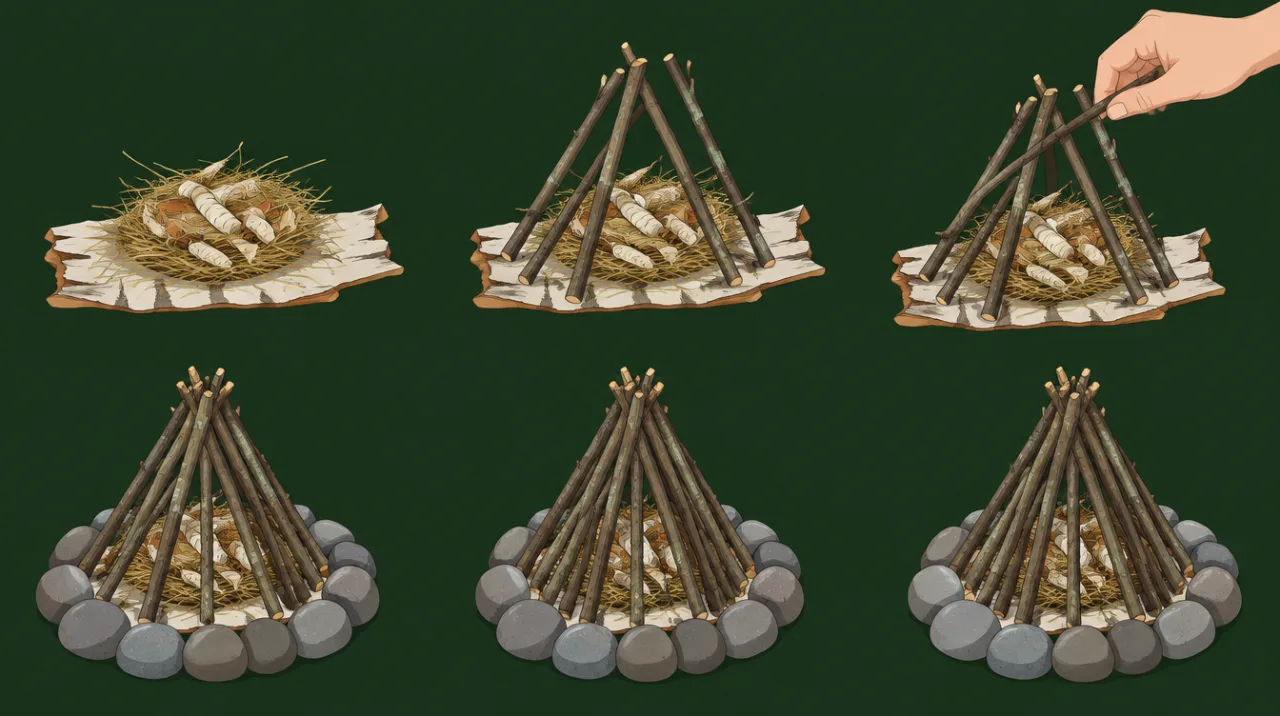
Tinder on a dry base, the lay around it - Light the tinder from the upwind side and blow gently at the base.
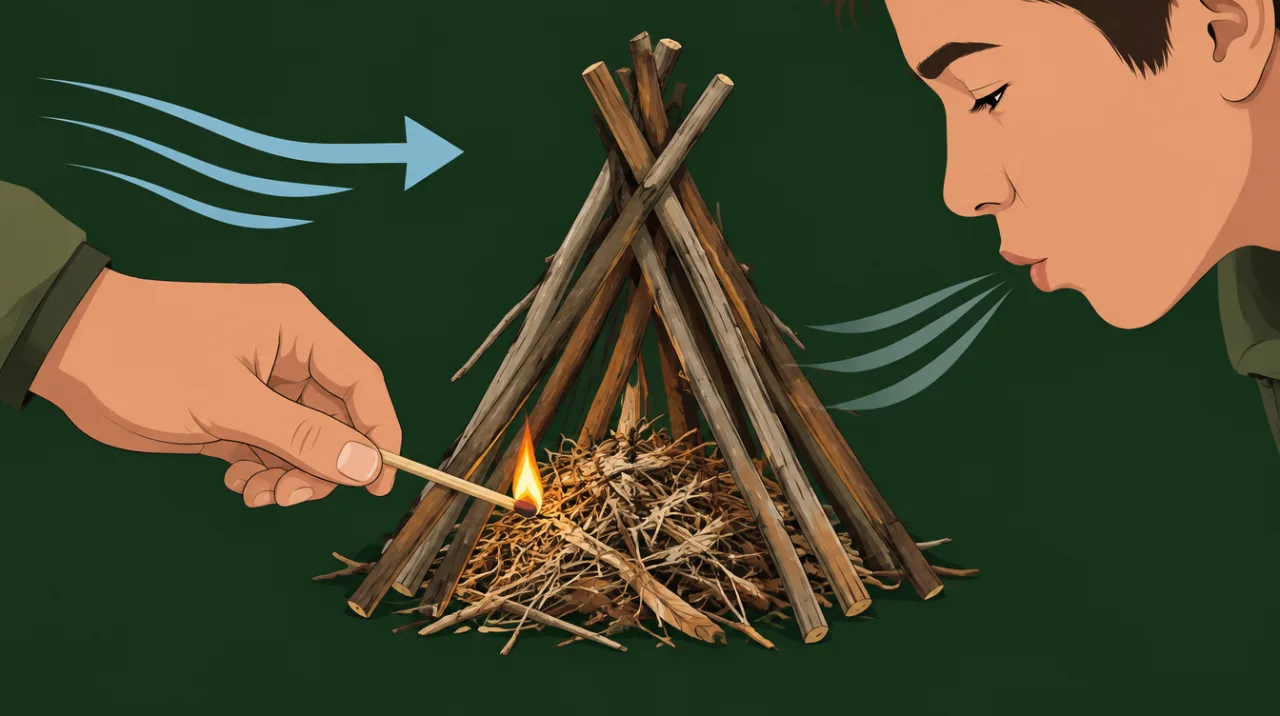
Light from the upwind side and blow at the base - Add thin wood first, then thicker. Do not smother the flame with too much fuel: fire needs air.
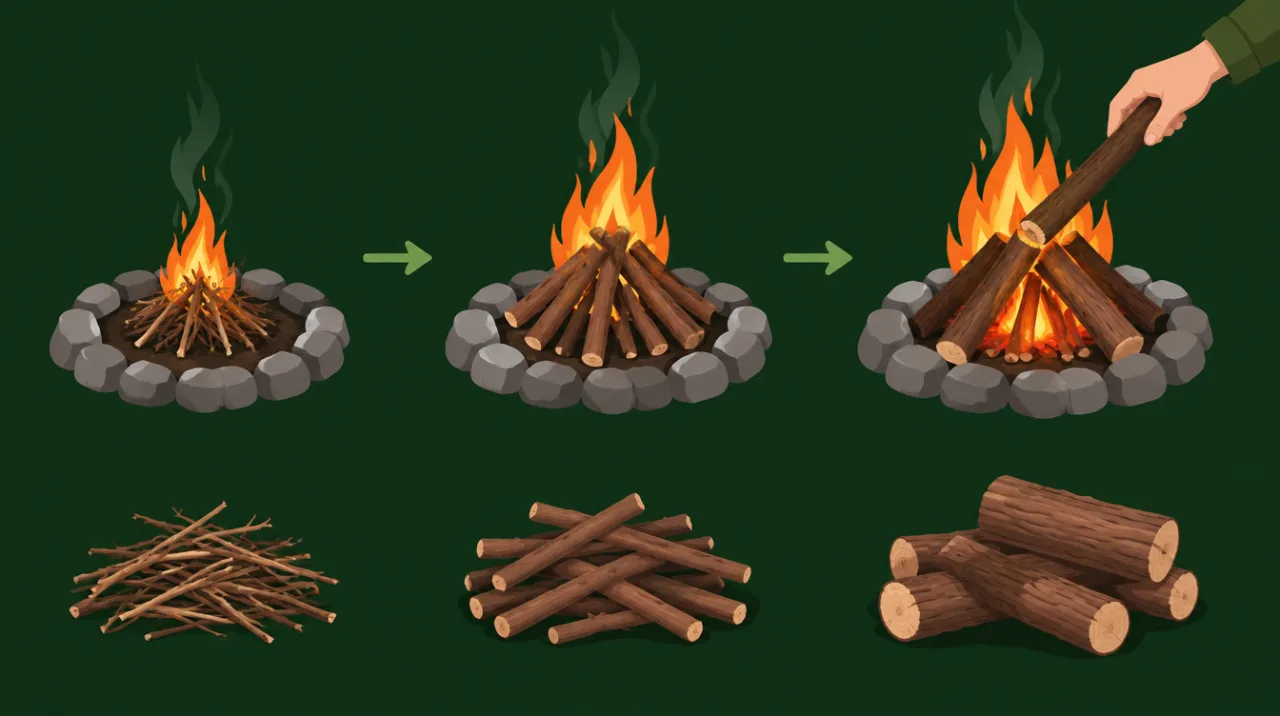
Thin wood first, then thicker - Keep the fire small and steady. A big fire is more risk and burns more wood.
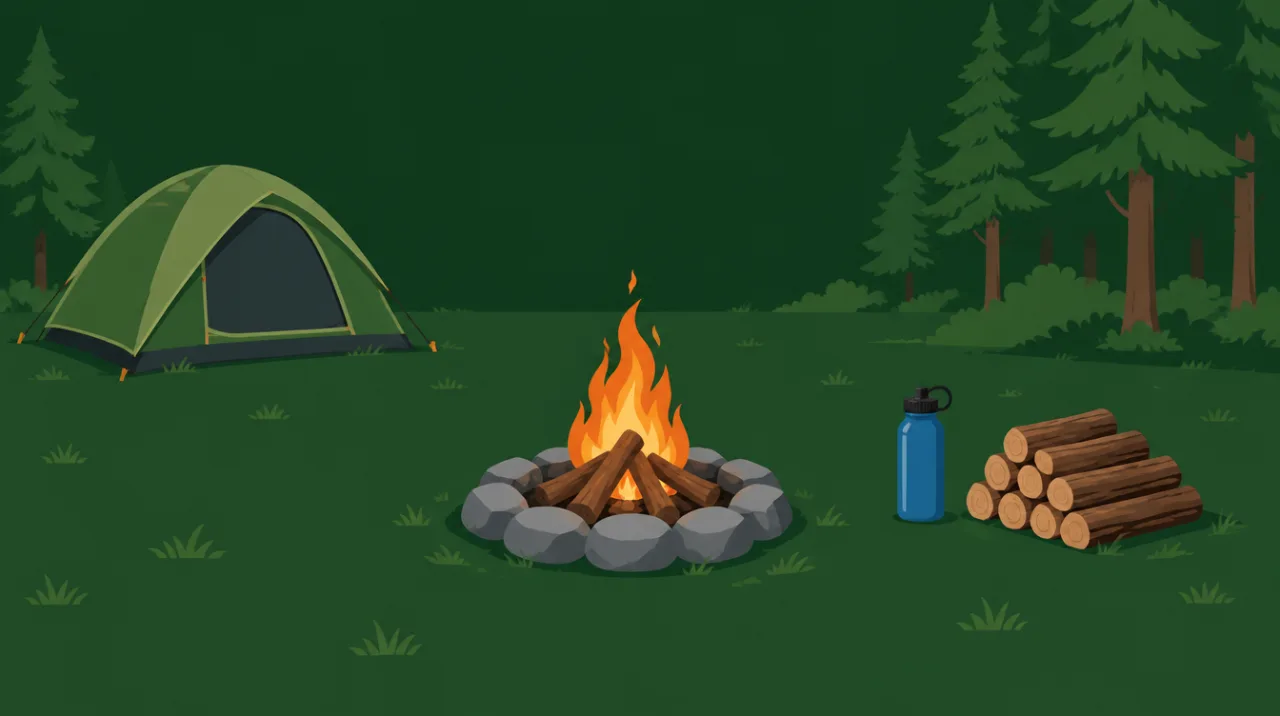
A small, steady fire with water at hand
When everything is wet
- Look for dry wood under fallen trunks, inside dead standing branches and under rock overhangs. A dry twig snaps, a wet one bends.
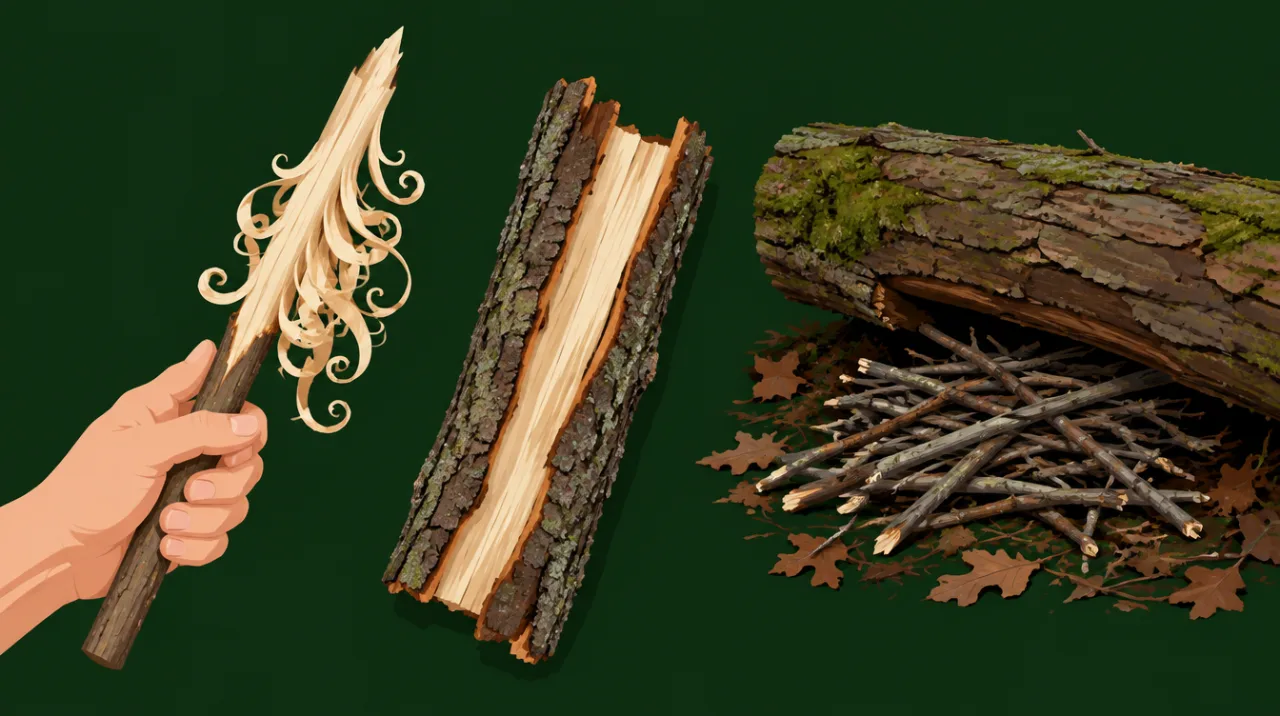
Dry core from wet bark and a feather stick - Shave off wet bark and use the dry core. Make “feather sticks”: curls hanging from a stick.
- On snow or wet ground, build a platform of sticks.
- If you have them, use fire-starter cubes, wax or cotton wool soaked in petroleum jelly.
Putting it out
- Spread the embers and pour water until the hissing stops. Stir and check with the back of your hand that it is cold.
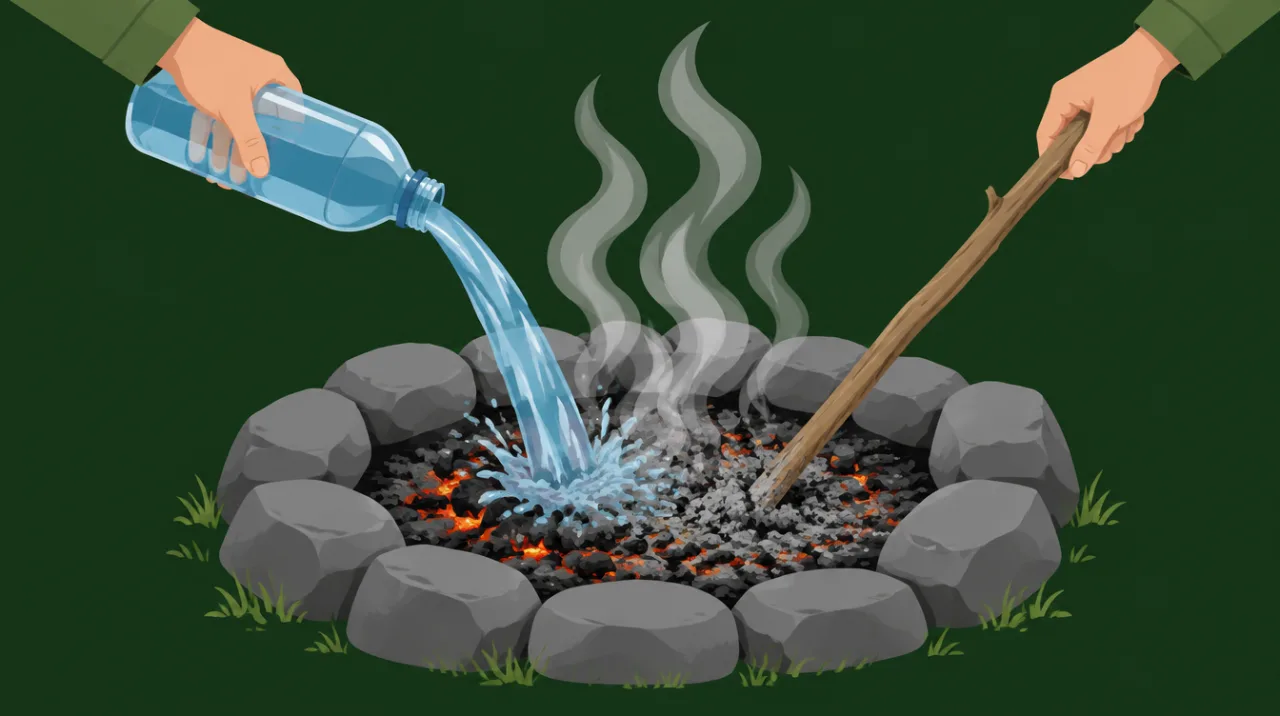
Pour water and stir the embers until cold - With no water, bury the fire in soil or sand, but only if no roots are smouldering in it.
- Put it out before you leave. The ashes must be cold to the touch.
Watch out
- Never light a fire inside a tent, a car or a room without a chimney: it risks fire and carbon monoxide poisoning.
- Never use petrol, alcohol or other liquids to start a fire: they can explode.
- A forest fire starts with one spark. If a fire gets out of control, call 112 (or your local emergency number) at once.
See also
Frequently asked questions
Which fire lay is best for a beginner?
The tepee: it catches fast and gives a strong flame, good for boiling water.
What do I do when everything is wet?
Look for dry wood under fallen trunks and inside dead branches, shave off wet bark to reach the dry core and build a platform of sticks.
Related topics
📩 Free 72-hour plan by email
A 72-hour shopping and go-bag list, plus a short monthly checklist. Free, no spam.
Keep it on your phone
SurvivalZone.app is a free app for every emergency, with no account and no app store. It works without internet and shows the nearest shelters and help points, local radio, a 72-hour plan and a mountain trip planner.
Thank you for reading. If this could help someone, send it to the people you care about. Getting ready takes a moment, and in a crisis every minute counts.
Coming soon: the app’s permanent address will be survivalzone.app.
Other guides
- 💧 How to make water safe
- 🍲 Food without power
- ⛺ Shelter at home and outdoors
- 👨👩👧 Protecting your family and yourself
- 💊 Run out of medicine
- 🎒 Go bag checklist
- 🩹 Home first aid kit
- 🔦 Prepare your home for a blackout
- ✈️ Air travel: a safe trip
- 🏜️ Desert trip
- 🪢 Knots worth knowing
- 🔥 Campfire and outdoor cooking
- 🧭 Survival kit for your backpack
- 📞 Family communication plan
- 🥫 Emergency food and medicine supplies
- 🧼 Hygiene in a crisis
- 📁 Documents and money in a crisis
- 🧰 Tools and equipment for a crisis
- 🧥 Clothing and warmth in a crisis
- 📻 Communication and navigation in a crisis
- 🥶 Home ready for frost
- 🌊 Prepare your home for floods
- 🔥 Fire safety at home
- 🌡️ Get ready for a heatwave
- ⛈️ Storm-proof your home
- 🚀 Shelter for an air raid
- 📢 Sirens and alerts
- ❤️ Learn CPR and find an AED
- 🌍 Prepare for earthquakes
- ⛵ Safe sailing at sea
- 🚗 Car ready for an accident
- ☠️ Carbon monoxide and gas alarms
- ❄️ Winter car kit
- 🌩️ Mountain storms: plan your hike
- 🫀 Heart attack and stroke signs
- 🏊 Water safety
- 🌲 Prevent wildfires
- 🦠 Prepare for an epidemic or pandemic
- 🧒 If your child gets lost
- 🫁 Prevent choking
- 🩸 Kit for severe bleeding
- 🔥 Prevent burns
- 😷 Smog: protect your health
- 🐻 Bears: avoid encounters
- 🐗 Wild boar: avoid encounters
- 🏢 Evacuation at work
- 🌪️ Shelter from a tornado
- 🌧️ Protect your basement from flash floods
- ☣️ Chemical incident: prepare your home
- 🏠 Quarantine at home
- 🛡️ Secure your phone and accounts
- 🔌 Your fuse box: get ready in advance
- 💨 Gas at home: a safe installation
- 😵💫 Fainting: how to prevent it
- 🏫 School and emergencies: prepare your child and family
- 🏜️ Drought: how to prepare your home and garden
- 🌋 Travelling near volcanoes: how to prepare
- 🛴 Riding an e-scooter safely
- 🛑 Attacker at school: how to prepare your child
- 🔔 Smoke and CO alarms: a home ready for the alarm
Sources
- US Forest Service: campfires and fire safety
- US Forest Service / Smokey Bear: campfire safety
- US Army field manual FM 21-76 Survival (EverySpec archive)
- Polish Forest Act (art. 30: fires in and near forests, Polish)
- Polish State Forests: forest fire danger
- German Weather Service: forest fire danger index
Official sources are checked automatically every day. Last check: 2026-11-04.
General guidance only; it does not replace the emergency services. If a life is in danger, call 112.